Working from home offers incredible flexibility, but not everyone has the luxury of a dedicated, spacious home office. When your desk shares a room with your bed or your living room sofa, the boundaries between rest and labor can quickly blur. Setting up a functional office in a cramped apartment or a tiny alcove presents a unique set of spatial challenges that can negatively impact your focus.
Fortunately, physical limitations do not have to dictate your cognitive output. By implementing strategic productivity workspace ideas, you can transform even the tightest quarters into a highly efficient environment. This descriptive guide provides actionable strategies for maximizing limited real estate, proving that you do not need a massive room to maintain deep concentration.
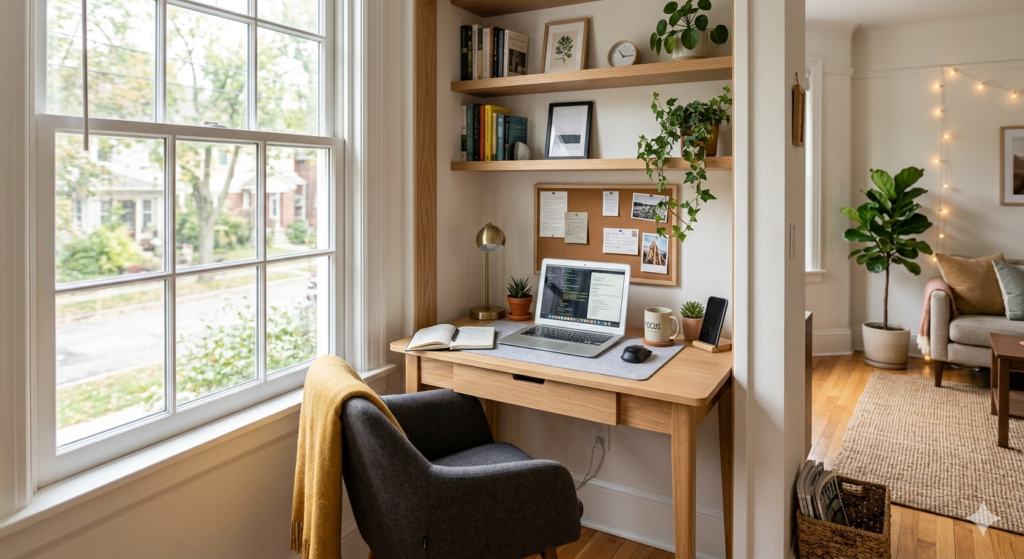
Designing for Limited Real Estate
To optimize a tiny footprint, you must fundamentally change how you view your available space.
A productive small workspace is a carefully planned area that maximizes limited square footage through strategic furniture placement and vertical organization. It prioritizes essential tools and ergonomic design, ensuring that a lack of physical room does not hinder cognitive output or daily focus.
When square footage is scarce, every single object must serve a distinct purpose. You cannot afford to store items “just in case” they are needed. A successful compact office relies on rigid boundaries and a commitment to keeping non-essential items completely out of the designated work zone.
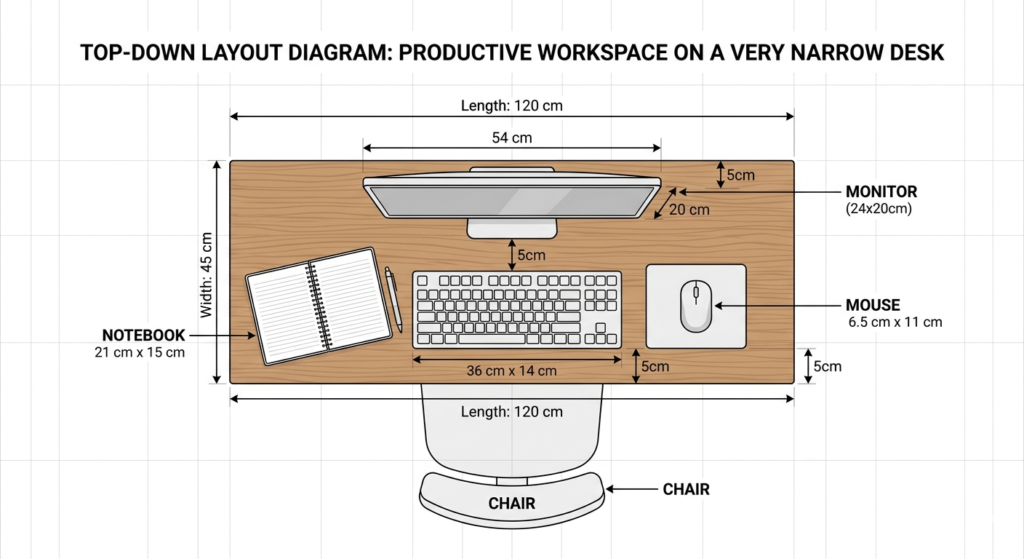
Maximizing the Corner Desk Setup
Corners are notoriously underutilized areas in most homes, often gathering dust or housing decorative plants. However, for remote workers, a corner represents a massive opportunity.
Implementing a corner desk setup allows you to utilize dead space while naturally creating a physical boundary between your work area and the rest of the room. An L-shaped or triangular desk provides two distinct work zones within a single footprint. You can easily position your primary computer monitor on one side while leaving the other side completely open for reviewing physical documents or writing.
Furthermore, facing into a corner naturally eliminates visual distractions from the rest of the room. This layout subtly signals to your brain that it is time to focus entirely on the tasks directly in front of you.
Utilizing Vertical Storage Solutions
The most common mistake people make in small spaces is trying to store all their supplies horizontally across the desk surface. When you cannot build outward, you must build upward.
Vertical storage is the secret to maintaining a functional footprint in a tight area. Utilizing the wall space directly above your monitor keeps your reference materials accessible without sacrificing your working area. Simply installing a set of floating wall shelves above the desk provides an excellent, low-profile home for notebooks, pens, and essential hardware.
Additionally, consider using tall, narrow filing cabinets or utilizing the space directly underneath the desk for a rolling storage cart. The goal is to move as much mass off the primary work surface as possible.
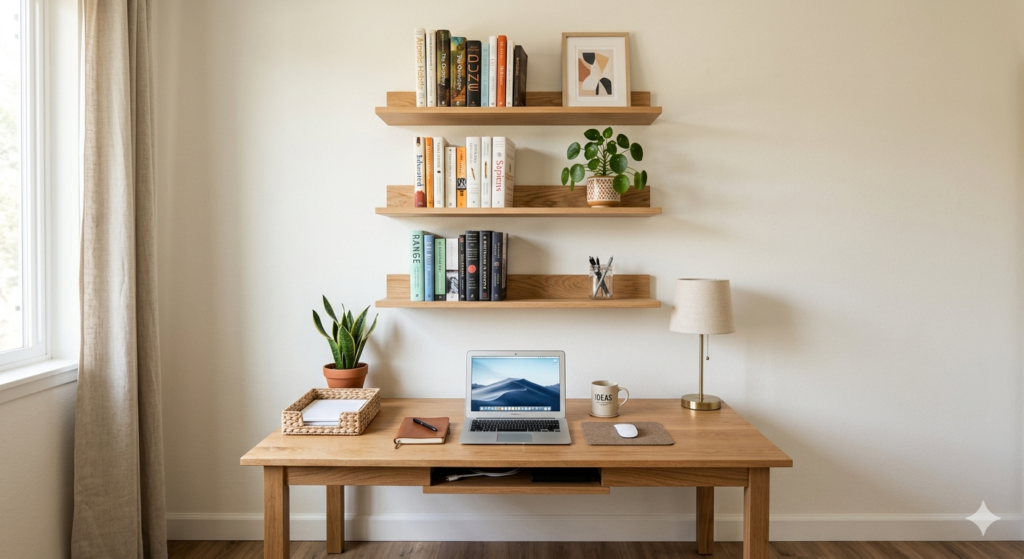
Achieving a Clutter-Free Desk
In a small workspace, a minor mess quickly feels like a catastrophic disaster. Two stray coffee cups and a stack of mail can instantly consume your entire desk.
Maintaining a clutter-free desk is an absolute necessity, not just an aesthetic preference. To manage this, adopt a strict “one in, one out” policy for your tools and documents. At the end of every single workday, spend five minutes clearing the surface down to its base state.
To understand the deeper psychological importance of this daily reset, it helps to explore the core principles of a Distraction Free Workspace. Visual calm translates directly to mental clarity, ensuring you start the next morning without feeling overwhelmed by yesterday’s debris.
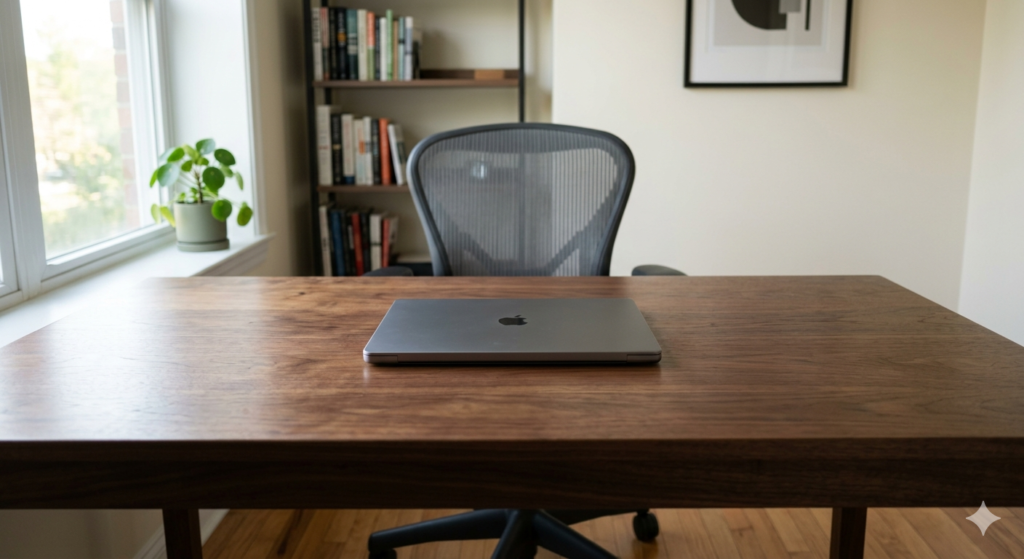
Lighting and Home Office Inspiration
Small corners and closets converted into offices can easily feel dark and claustrophobic. Proper lighting is essential to make the area feel larger and more inviting.
Prioritize natural light by positioning your setup near a window if possible. If natural light is scarce, use a combination of overhead ambient lighting and a dedicated, adjustable desk lamp to prevent eye strain. Mirrors can also be strategically placed on adjacent walls to reflect light and create the illusion of depth.
When looking for home office inspiration, keep your decorative elements highly curated. A single framed print or one small, low-maintenance plant adds personality without generating visual noise. Keep the aesthetic light, bright, and strictly intentional.
Conclusion
Working in a cramped environment does not have to be a frustrating experience. By applying these productivity workspace ideas, you can engineer a highly effective command center in virtually any room. Embracing a corner desk setup, building upward with vertical storage, and fiercely maintaining a clutter-free desk are the keys to small-space success. When you design your environment with strict intention, your physical limitations fade away, leaving you with a comfortable, distraction-free zone optimized for your best work.
Frequently Asked Questions (FAQ)
What is the best desk shape for a small room?
An L-shaped or triangular corner desk is generally the most efficient use of space. It utilizes empty corner areas and provides two separate working zones without protruding too far into the center of the room.
How can I store office supplies without desk drawers?
Vertical storage is the best alternative. Wall-mounted shelving, pegboards, and tall, narrow bookcases allow you to store essential items within arm’s reach while keeping your primary desk surface completely clear.
How do I make a small workspace feel bigger?
Maximize your lighting. Use bright, daylight-toned LED bulbs, paint the surrounding walls a light, neutral color, and consider placing a mirror nearby to reflect light and create the optical illusion of a larger room.
Why is a clutter-free desk so important in small spaces?
In limited square footage, visual clutter is magnified. A messy desk in a small room drastically increases cognitive load and feelings of claustrophobia, which quickly drains your mental energy and breaks your concentration.