In modern workspaces, whether it is a bustling open-plan office, a busy local coffee shop, or a noisy home environment, auditory distractions are everywhere. A sudden conversation or the hum of traffic can instantly shatter your concentration, pulling your brain out of deep work. When you cannot control your physical surroundings, you must learn to control your auditory environment.
Understanding exactly what is active noise cancellation is the first step toward building an impenetrable bubble of focus. By leveraging modern audio hardware and specific soundscapes, you can protect your cognitive bandwidth from unpredictable interruptions. This comprehensive guide serves as your pillar resource for mastering audio ergonomics, explaining the science behind silencing your environment and how to utilize sound to trigger deep concentration.
The Science of Silence
To effectively eliminate distractions, we must first define the core technology responsible for modern auditory control.
What is active noise cancellation? Active noise cancellation (ANC) is an audio technology that uses built-in microphones to listen to external ambient noise, then generates an opposite sound wave to neutralize the incoming sound. This destructive interference physically cancels out background distractions before they reach your ear.
Unlike passive isolation—which simply relies on thick ear pads to physically block sound waves from entering your ear canal—ANC is highly proactive. It requires power and advanced processing chips to continuously analyze your environment in real-time. By fighting sound with sound, this technology provides a dramatic reduction in the overall volume of your surroundings, allowing your nervous system to relax.
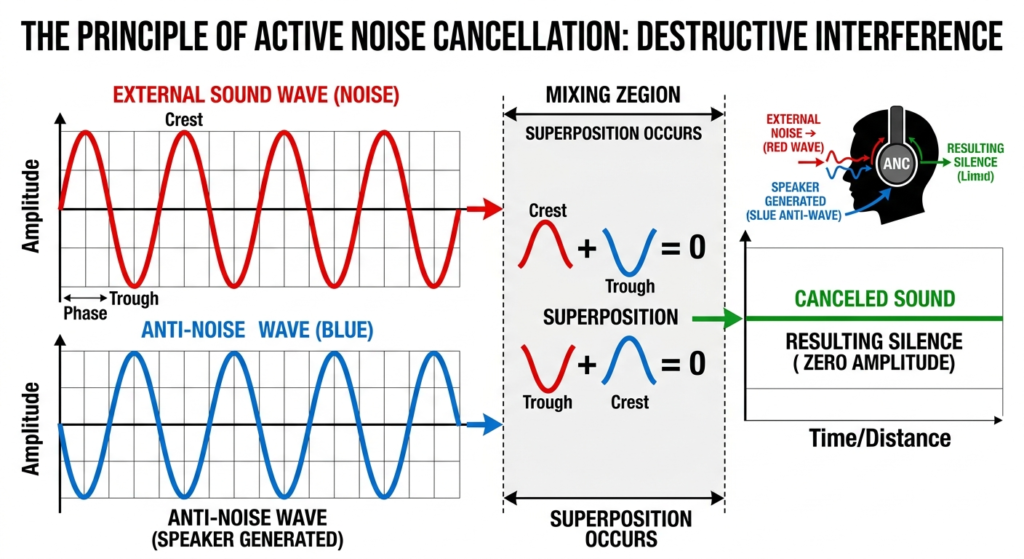
How ANC Technology Defeats Ambient Noise
While ANC technology is incredibly powerful, it has specific strengths and limitations based on the physics of sound frequencies.
ANC excels at eliminating low-frequency, droning ambient noise. The deep rumble of an airplane engine, the constant hum of office air conditioning, or the steady roar of highway traffic are easily mapped and canceled by the algorithms. Because these sounds are consistent, the microchips can perfectly predict and neutralize them.
However, ANC struggles slightly with high-frequency, sudden sounds. A loud dog bark, a glass shattering, or a sharp human voice fluctuates too wildly for the processor to perfectly mirror in real-time. Therefore, achieving absolute silence requires combining ANC with a secondary acoustic strategy to handle unpredictable frequencies.
The Role of Sound Masking
When hardware alone cannot eliminate a distracting conversation, you must introduce sound masking. This is the practice of adding a continuous, unobtrusive background sound to cover up sudden, sharp noises.
Sound masking works by raising the “auditory floor” of your environment. If you are sitting in a completely silent room, a dropped pen sounds incredibly loud and startling. If you raise the baseline volume with a gentle, continuous hum, that same dropped pen barely registers in your brain.
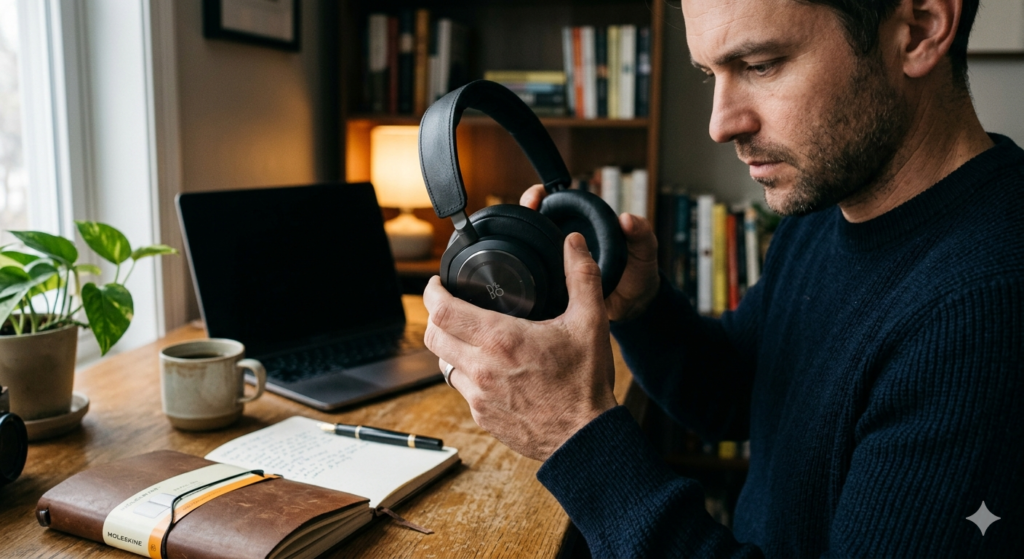
To achieve ultimate focus, you should layer your defenses. For many professionals, utilizing a premium pair of headphones allows them to activate high-end ANC while simultaneously playing a masking track, effectively neutralizing both low rumbles and sharp voices.
Exploring White Noise Benefits
The most popular and scientifically supported audio for sound masking is white noise. This specific frequency profile is a powerful tool for cognitive endurance.
True white noise contains every single frequency across the spectrum of human hearing, played at an equal intensity. It sounds similar to the static of an untuned television or a heavy rainstorm. One of the primary white noise benefits is its ability to occupy the auditory processing center of your brain without providing any distracting information (like music lyrics do).
Because it is a constant, meaningless sound, your brain quickly tunes it out. This creates a state of auditory sensory deprivation. When your ears are no longer scanning the environment for threats or interesting conversations, your prefrontal cortex can direct 100% of its energy toward the task on your screen.
Designing Your Auditory Environment
Using these tools effectively requires intentional routine building. Your headphones should become a psychological trigger for deep concentration.
Do not wear your noise-canceling headphones all day. If you use them constantly, your brain will stop associating them with high-value output. Instead, put them on specifically when it is time to perform cognitively demanding work. This creates a Pavlovian response; eventually, the simple physical act of placing the pads over your ears will signal to your brain that it is time to focus.
Finally, keep your audio volumes moderate. The goal of ANC is to allow you to listen to masking tracks or focus music at a very low, safe volume. Blasting audio to drown out your environment will only cause ear fatigue and eventual hearing damage.
Conclusion
Mastering your auditory environment is a non-negotiable skill for thriving in distracting modern workspaces. Knowing what is active noise cancellation allows you to leverage powerful hardware to eliminate the exhausting low-frequency hums of daily life. By understanding the limitations of ANC technology and pairing it with strategic sound masking, you can build a reliable system for concentration. Embracing white noise benefits and using your headphones as a psychological trigger will transform any noisy room into a private sanctuary optimized for deep, uninterrupted focus.
Frequently Asked Questions (FAQ)
What is active noise cancellation?
Active noise cancellation (ANC) is technology that uses microphones to listen to your environment and generates opposite sound waves (anti-noise) to physically cancel out incoming background sounds before they reach your ears.
Can ANC technology damage my hearing?
No, it actually protects your hearing. Because ANC effectively eliminates background noise, you do not have to turn your music or audio up to dangerously loud volumes to drown out your surroundings, thereby preventing noise-induced hearing loss.
Why can I still hear people talking when my noise cancellation is turned on?
ANC is highly effective at neutralizing steady, low-frequency sounds (like engines or fans). Human voices fluctuate rapidly in pitch and volume, making it difficult for the ANC algorithms to predict and completely cancel them in real-time.
What is the difference between active noise cancellation and sound masking?
ANC actively attempts to eliminate sound waves from reaching your ear using destructive interference. Sound masking involves playing a continuous, unobtrusive sound (like white noise) to cover up or “mask” any unpredictable noises that make it through your physical environment.