When trying to focus in a distracting environment, complete silence is often impossible to achieve, and standard music can be too engaging for deep concentration. As a result, millions of professionals turn to steady, continuous background audio to block out the world. However, not all static sounds are created equal, and choosing the wrong audio profile can actually cause listener fatigue rather than improve productivity.
Understanding the differences between white noise vs pink noise allows you to tailor your auditory environment to your specific cognitive needs. By exploring the physics behind different sound frequencies, you can select the perfect auditory backdrop for your workday. This comparative guide breaks down the science of sound colors, explaining how different frequencies impact your brain and which profile is best suited for maintaining deep, uninterrupted focus.

The Science of Sound Colors
To choose the right audio for your workday, you must first understand how audio engineers classify continuous sound.
The debate of white noise vs pink noise comes down to frequency distribution. White noise contains all audible frequencies at equal intensity, sounding like a steady television static. Pink noise also contains all frequencies but decreases intensity at higher pitches, creating a deeper, softer sound resembling steady rainfall.
In audio engineering, “sound colors” are used to describe the power spectrum of a noise signal. Just as white light contains all the colors of the visual spectrum, white noise contains all the frequencies of the auditory spectrum. When you manipulate the intensity of the high, mid, and low frequencies, the “color” of the sound changes.
These subtle mathematical shifts in frequency drastically alter how the human ear and the nervous system perceive the sound over long periods.
White Noise for Auditory Masking
White noise is the most famous of the sound colors, primarily because of its sheer blocking power. Because it pushes high frequencies at the exact same volume as low frequencies, it possesses a sharp, hissing quality.
This sharp quality makes it the ultimate tool for auditory masking. Auditory masking occurs when a continuous sound covers up unpredictable, distracting noises in your environment. If you work in a chaotic open office with loud conversations and ringing phones, white noise effectively raises the auditory baseline, making those sudden spikes in volume imperceptible to your brain.
However, the high-frequency intensity of true white noise can become grating over a full eight-hour workday. While it pairs perfectly with hardware strategies outlined in our guide on how to Use Noise Cancelling, many users find they need to lower the volume slightly to avoid auditory fatigue.
The Calming Effect of Pink Noise
If white noise sounds like harsh television static, pink noise sounds like nature. By rolling off the harsh, high-pitched frequencies, pink noise places more emphasis on the lower end of the spectrum.
This creates a smooth, soothing rumble that resembles the sound of heavy rain, wind rustling through leaves, or a distant ocean tide. Because human ears are naturally more sensitive to high frequencies, pink noise sounds much more balanced and flat to our biological perception.
For long, sustained deep work sessions, pink noise is often the superior choice. It provides excellent background masking without the abrasive “hiss” that causes listener fatigue, keeping your nervous system calm and your mind steadily engaged.

Exploring Brown Noise for Deep Focus
As you move further down the frequency spectrum, you encounter an even deeper sound profile known as brown noise (or red noise). This color rolls off the high frequencies even more aggressively than pink noise.
The result is a deep, powerful, and heavy roar. Brown noise resembles the sound of a roaring waterfall, the inside of an airplane cabin, or distant rolling thunder. It contains almost no treble or sharp hisses.
Many professionals prefer brown noise for reading, writing, and intense analytical tasks. The deep frequencies create a heavy, weighted auditory blanket that grounds the listener. It feels less like a sound you are listening to and more like an atmospheric pressure that isolates you from the outside world.

Background Sounds for ADHD
The discussion of sound colors is particularly relevant in the realm of neurodiversity. Standard office environments are often either too chaotic or too silent for the neurodivergent brain to function optimally.
When discussing background sounds for adhd, continuous audio plays a crucial role in dopamine regulation. A completely silent room often causes the ADHD brain to become under-stimulated, prompting it to seek out internal or external distractions. Providing a steady stream of pink or brown noise satisfies the brain’s need for sensory input without demanding active attention.
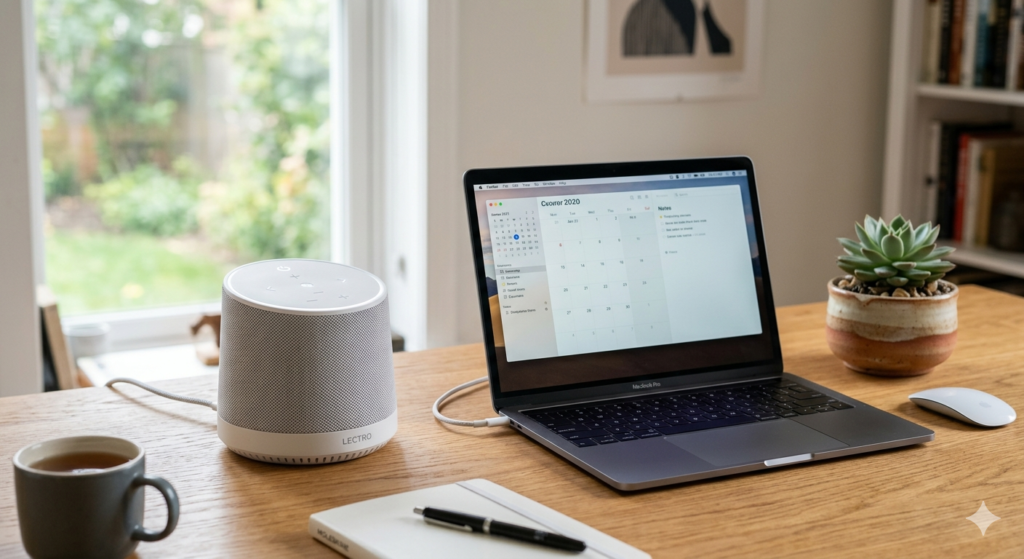
To maintain focus without the temptation of a smartphone screen, many professionals utilize a dedicated white noise machine on their desk. Having a physical device dedicated to generating these sound colors removes the risk of opening a phone app and accidentally falling into a social media scroll.
Conclusion
The choice between white noise vs pink noise ultimately depends on your environment and your personal auditory tolerance. If you need aggressive auditory masking to block out a chaotic office, the sharp hiss of white noise is unmatched. However, if you are looking for a soothing, sustainable backdrop to support hours of deep concentration, the natural rumble of pink or brown noise provides a much gentler experience. By experimenting with these various sound colors, you can engineer the perfect auditory environment to protect your focus and optimize your cognitive output.
Frequently Asked Questions (FAQ)
What are sound colors?
Sound colors (like white, pink, and brown) are terms used in audio engineering to describe the power spectrum of a noise signal. The “color” changes based on how the intensity of the audio is distributed across high, mid, and low frequencies.
Is pink noise or white noise better for concentration?
For long periods of concentration, pink noise is generally considered better. While white noise is excellent for blocking out sudden sounds, its high-frequency hiss can cause ear fatigue over time. Pink noise sounds more natural and balanced to the human ear.
What does brown noise sound like?
Brown noise has virtually no high-frequency sounds, focusing entirely on deep, low-frequency rumbles. It sounds similar to a heavy, rushing waterfall, distant thunder, or the steady hum inside the cabin of a commercial airplane.
How does auditory masking work?
Auditory masking works by raising the baseline level of sound in a room with a continuous, meaningless audio track. Because the baseline volume is higher, sudden, distracting noises (like a dropped book or a cough) do not register as starkly to your brain, making them much easier to ignore.