In recent years, few topics in digital wellness have generated as much panic and product marketing as the illumination coming from our screens. We are constantly told that our phones and monitors are beaming toxic rays directly into our eyes, causing everything from severe fatigue to permanent blindness. As a result, an entire industry of filters, screen protectors, and special lenses has emerged to solve this modern problem.
But what does the medical science actually say? When it comes to blue light, it is crucial to separate marketing hype from biological reality. This educational guide cuts through the noise to explore the factual physics of digital illumination. We will examine how artificial light truly interacts with the human body, uncovering what is a legitimate concern and what is simply modern fiction.
What Actually is Blue Light?
Before we can understand how it affects us, we need to define the physics of light itself.
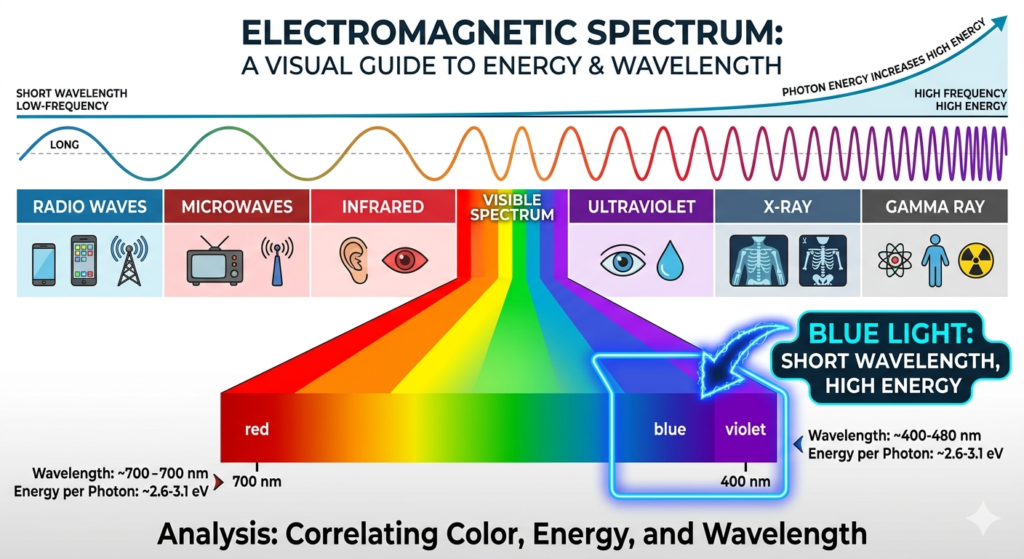
Blue light is a high-energy, short-wavelength portion of the visible light spectrum. While it is naturally emitted by the sun in massive quantities to keep humans alert during the day, it is also artificially produced by digital screens, LED lighting, and fluorescent bulbs.
A basic spectrum analysis reveals that visible light contains a range of colors, each with different wavelengths and energy levels. Red light has longer wavelengths and less energy, while blue light has very short wavelengths and high energy.
Because of this high energy, blue waves flicker more easily than longer, weaker wavelengths. This flickering creates a subtle, almost imperceptible glare that reduces visual contrast. While this does not cause permanent damage, it forces the eye to work significantly harder to maintain focus, leading to rapid visual fatigue.
The Myth of Permanent Eye Damage
One of the most persistent fictions surrounding screen use is that the light emitted will permanently burn your retina or cause premature macular degeneration. Current clinical research does not support this claim.
The amount of light emitted by consumer electronics is only a fraction of what you receive from stepping outside on a cloudy day. The physical discomfort you feel after an eight-hour workday is real, but it is a muscular issue, not a retinal burn. If you want to understand the true source of your midday headaches, looking into the mechanics of Computer Eye Strain will explain how focusing on pixels causes temporary muscular exhaustion.
The fiction is that screens blind you. The fact is that screens cause uncomfortable, but reversible, ocular muscle fatigue.
Melatonin Suppression and Sleep Quality
While the threat to your physical vision is largely fiction, the threat to your brain chemistry is an absolute, documented fact. The true danger of digital illumination lies in how it interacts with the endocrine system.
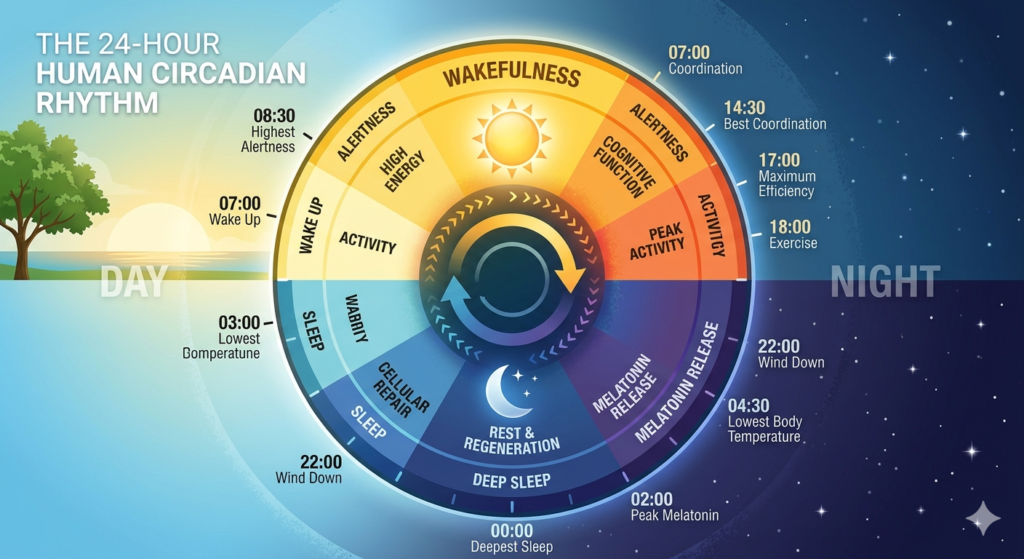
Human biology is heavily regulated by hormones, specifically melatonin, which signals to the brain that it is time to sleep. Environmental light controls the release of this hormone. When your eyes detect high-energy short wavelengths, they send a direct signal to the pineal gland to halt melatonin production, keeping you awake and alert.
Using a brightly lit device in bed results in severe melatonin suppression. Because your brain is flooded with the chemical signal for “daytime,” it cannot properly initiate the sleep cycle. This drastically degrades your overall sleep quality, leading to a state of chronic grogginess the following morning.
Circadian Rhythm Disruption
This hormonal interference leads to a broader systemic issue known as circadian rhythm disruption. Your circadian rhythm is your body’s internal 24-hour clock, which regulates not only sleep but also digestion, body temperature, and cellular repair.
For millennia, this clock was perfectly synced with the rising and setting of the sun. Today, artificial lighting allows us to extend “daylight” artificially. When you expose yourself to bright screens at midnight, you completely confuse your biological clock.
Chronic circadian rhythm disruption is linked to a host of serious health issues beyond mere tiredness, including metabolic dysfunction and weakened immune responses. Respecting your body’s need for darkness is a fundamental requirement for long-term health.
Do Protective Glasses Actually Work?
With the science clear, we must evaluate the tools sold to protect us. Do protective lenses actually do anything? The answer depends entirely on when and why you use them.
During the daytime, blocking this light is generally unnecessary and counterproductive. You want the alertness it provides to remain focused on your work. The physical eye strain you feel at 2:00 PM is caused by glare, reduced blinking, and focusing fatigue, which colored lenses cannot fix.
However, in the evening, utilizing a pair of blue light blocking glasses can be a highly effective strategy. By wearing these specifically in the two hours before bed, you physically block the wavelengths that trigger melatonin suppression. This allows your brain to naturally transition into a restful state, protecting your sleep architecture while still allowing you to comfortably use a device if necessary.

Conclusion
The conversation around blue light is heavily clouded by marketing, but the underlying science is straightforward. The fiction that everyday screens will permanently damage your retinas should be discarded. However, the fact remains that artificial digital illumination profoundly impacts our biology. Through severe melatonin suppression and subsequent circadian rhythm disruption, late-night screen use systematically destroys our sleep quality. By understanding this spectrum analysis, you can stop fearing your monitor during the day and start fiercely protecting your eyes in the hours leading up to bedtime.
Frequently Asked Questions (FAQ)
What is blue light?
It is a portion of the visible light spectrum characterized by short wavelengths and high energy. It is naturally emitted by the sun and artificially produced by digital screens, smartphones, and LED lighting.
Does staring at a screen cause permanent eye damage?
According to current medical consensus, the amount of light emitted by consumer electronics is not powerful enough to cause permanent physical damage to the retina or lead to macular degeneration.
How does screen light affect sleep?
High-energy light suppresses the brain’s production of melatonin, the hormone responsible for inducing sleep. Exposure to screens before bed tricks the brain into thinking it is still daytime, causing severe circadian rhythm disruption and insomnia.
Should I wear protective glasses all day?
Generally, no. Exposure to high-energy light during the daytime is healthy and necessary for maintaining cognitive alertness and mood. Protective glasses are most effectively utilized 1-2 hours before bedtime to prevent sleep disruption.