Modern knowledge work heavily relies on the brain, but we often forget that the brain is entirely dependent on the physical body. When we spend eight to ten hours a day collapsed in an office chair, our biology interprets this sedentary state as a signal to rest. Heart rate drops, breathing becomes shallow, and cognitive processing inevitably begins to slow down.
If you find your concentration slipping away by the early afternoon, the solution might not be another cup of coffee; it might be a change in posture. Linking your physical stance to your mental state is a powerful productivity strategy. This guide explores the biological mechanisms behind standing desk benefits, detailing how simple positional shifts can dramatically improve your daily focus and cognitive stamina.

The Biology of Posture and Focus
To understand why standing improves concentration, we must look at how the body manages resources.
Standing desk benefits for focus are rooted in human biology. By engaging major muscle groups to remain upright, standing naturally increases heart rate and blood circulation. This physiological shift delivers more oxygen and glucose to the brain, combating fatigue and directly enhancing sustained cognitive alertness.
When you are seated, your leg muscles essentially turn off. This lack of muscular contraction causes your heart rate to drop and your blood to pool in your lower extremities. The brain, which consumes roughly 20% of the body’s energy, suddenly receives a slower, less efficient stream of fuel. By simply standing up, you re-engage your muscular system and force your cardiovascular system to work slightly harder, re-pressurizing the flow of nutrients to your prefrontal cortex.
Maintaining Energy Levels Throughout the Day
Almost every desk worker is familiar with the dreaded “afternoon slump”—that severe drop in motivation and clarity that typically occurs around 2:00 PM. While circadian rhythms play a role, prolonged sitting heavily exacerbates this fatigue.
Standing up is a natural countermeasure to this midday crash. The minor physical stress of balancing your body weight keeps your central nervous system slightly elevated. This low-level physical engagement prevents the body from slipping into a parasympathetic “rest and digest” state during work hours.
By keeping your nervous system engaged, you effectively stabilize your energy levels. You avoid the extreme peaks and valleys associated with caffeine consumption, replacing them with a steady, sustainable baseline of physical and mental stamina.
The Synergistic Sit-Stand Benefits
A common misconception is that if sitting is bad, you must stand for your entire shift. However, standing static for eight hours introduces its own set of physical problems, including joint compression and lower back strain. Physical pain is highly distracting and will quickly ruin your focus.
The true cognitive advantage lies in the sit-stand benefits. The human body is designed for movement, not static posturing. Alternating between sitting and standing every 45 to 60 minutes provides the optimal balance of rest and engagement. This transitional movement acts as a physical reset button for your brain.
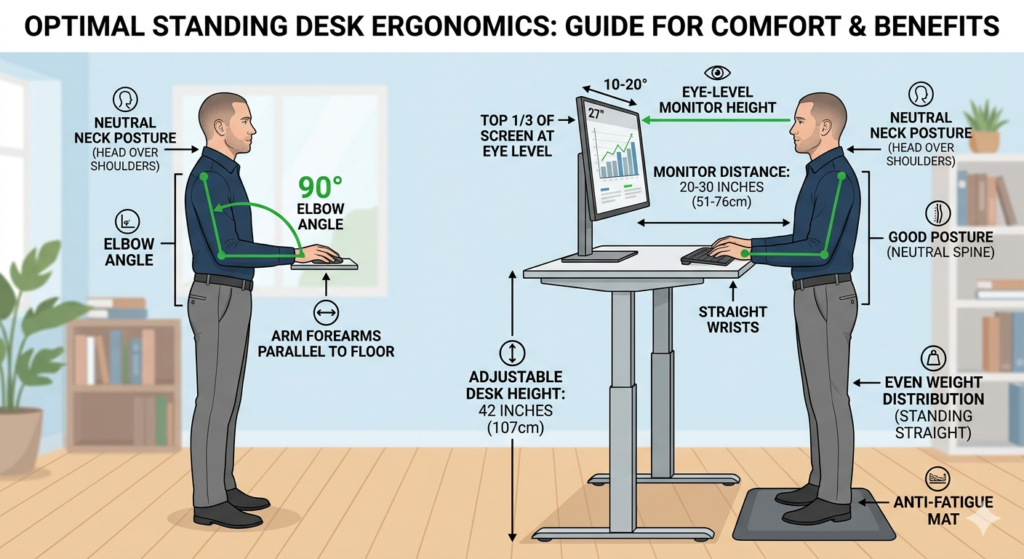
When you are in the standing phase, utilizing an anti-fatigue mat can drastically reduce the pressure on your heels and knees. By cushioning your stance and encouraging subtle micro-movements in your legs, you remove physical discomfort from the equation, allowing your mind to remain entirely locked onto your work.
Integrating Posture into Your Environment
A height-adjustable desk is simply a tool. To maximize its cognitive benefits, it must be integrated into a broader system of environmental design.
Your physical setup should support your intention to focus. A standing desk functions best when it serves as the centerpiece of a dedicated Distraction Free Workspace. When your desk is clear of clutter and your screen is positioned correctly, standing up becomes a deliberate transition into deep work, rather than just a physical stretch.
Ensure your ergonomics remain consistent when standing. Your monitor should still be at eye level to prevent neck strain, and your keyboard should allow your elbows to rest at a comfortable 90-degree angle.
Conclusion
The connection between the body and the mind is undeniable. Understanding the cognitive standing desk benefits allows you to leverage your physiology for better mental output. By embracing the transitional sit-stand benefits, you actively improve blood circulation, stabilize your daily energy levels, and cultivate a heightened state of alertness. A height-adjustable desk is not just an office accessory; it is a vital tool for regulating your nervous system and protecting your ability to perform deep, focused work throughout the entire day.
Frequently Asked Questions (FAQ)
How long should I stand at my desk for optimal focus?
Experts generally recommend a ratio of 1:1 or 2:1 sitting to standing. A popular and effective rhythm is sitting for 40 minutes and standing for 20 minutes every hour. The goal is frequent transition rather than prolonged periods of either posture.
Does standing at a desk improve blood circulation?
Yes. Sitting for long periods causes blood to pool in the legs and slows down the heart rate. Standing re-engages the leg muscles, which act as a pump to push blood back up toward the heart and brain, enhancing overall circulation.
Will a standing desk cure my afternoon fatigue?
While it is not a magical cure for chronic sleep deprivation, alternating your posture is highly effective at combating the mid-afternoon slump. The physical engagement of standing signals the nervous system to remain alert, providing a natural energy boost.
What is the correct ergonomic height for a standing desk?
When standing comfortably with your shoulders relaxed, the desk surface should align exactly with your elbows, allowing your forearms to rest parallel to the floor at a 90-degree angle. The top third of your computer monitor should be directly at your eye level.