In our hyper-connected modern world, screens dictate almost every aspect of our daily lives. From the moment we wake up to the alarm on our smartphones until we fall asleep scrolling through feeds, we are continuously consuming digital information. While technology offers incredible convenience, this unyielding connectivity often results in chronic stress, diminished attention spans, and a profound sense of burnout.
If you feel overwhelmed by your devices, you are experiencing a very normal reaction to an unnatural amount of stimulation. Addressing this modern fatigue requires a fundamental shift in how we interact with our screens. By asking what is digital wellbeing, we begin the necessary process of reclaiming our time and attention. This comprehensive guide serves as your master resource for understanding digital diets, establishing strict technological boundaries, and embracing a more intentional, offline lifestyle.
Understanding Our Relationship with Technology
Before we can fix our digital habits, we must define the ultimate goal of a tech-life balance. It is not about throwing your phone in the ocean; it is about conscious consumption.
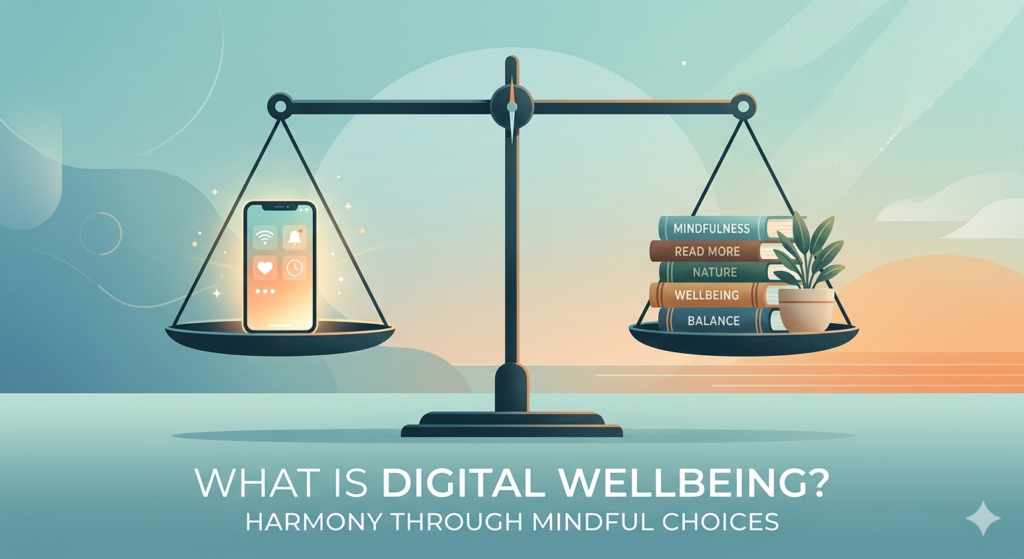
What is digital wellbeing? Digital wellbeing is the practice of crafting and maintaining a healthy relationship with technology. It involves using digital tools intentionally to enhance your life, rather than allowing screens and constant connectivity to distract, overwhelm, or control your daily behavior.
At its core, digital wellbeing is the pursuit of intentional living. Technology should serve as a tool that you pick up to perform a specific task and then put down when the task is complete. When technology begins to use you—by harvesting your attention through algorithmic feeds and push notifications—your wellbeing is compromised.
Recognizing that your devices are engineered to be addictive is the first step toward taking back your autonomy.
Key Digital Detox Benefits
Taking a deliberate break from your screens—often referred to as a digital detox—provides an immediate, measurable physiological reset for your brain and body.
One of the most profound digital detox benefits is the rapid reduction in baseline anxiety. Social media platforms often trigger a constant state of comparison and a fear of missing out (FOMO). By stepping away, you silence these artificial stressors, allowing your nervous system to return to a calm, parasympathetic state.
Additionally, reducing screen time directly impacts your physical health. Decreased exposure to blue light, particularly in the evening, regulates your circadian rhythm and drastically improves sleep quality. You will also likely experience relief from chronic tech-induced ailments, such as eye strain, tension headaches, and “tech neck” posture issues.

Establishing Healthy Tech Boundaries
To maintain these benefits long-term, a temporary detox is not enough. You must implement sustainable, healthy tech boundaries in your everyday environment.
Begin by establishing spatial boundaries. Designate specific areas in your home as “tech-free zones.” The bedroom and the dining room table are two of the most critical spaces to protect from digital intrusion. By removing screens from the bedroom, you protect your sleep hygiene and ensure your mornings begin with your own thoughts, rather than the demands of an inbox.
Temporal boundaries are equally important. Implement a rule to power down all non-essential screens at least one hour before sleep. During the workday, relying on willpower alone to ignore a buzzing phone is often a losing battle. Utilizing a phone lock box during deep work sessions or family time can physically enforce these boundaries, completely removing the temptation to habitually check for updates.

Cultivating Meaningful Offline Habits
When you successfully reduce your screen time, you will suddenly find yourself with hours of unoccupied time. If you do not actively fill this void, the boredom will inevitably drive you back to your devices.
Building robust offline habits is the final pillar of digital wellness. Replace the digital scroll with tactile, real-world activities that engage your senses and provide genuine fulfillment. This might include reading physical books, cultivating a garden, learning an instrument, or engaging in physical exercise.
These offline habits do more than just pass the time; they rebuild your brain’s capacity for sustained attention. Activities like painting or woodworking require a slower, more deliberate pace, which helps heal the fractured attention spans caused by rapid-fire digital content.

Conclusion
Understanding what is digital wellbeing is a lifelong practice, not a destination. As technology continues to evolve and become more integrated into our environment, our strategies for managing it must also adapt. By recognizing the profound digital detox benefits, enforcing strict healthy tech boundaries, and actively choosing to cultivate fulfilling offline habits, you can protect your mental space. Intentional living means ensuring that you are the master of your technology, using it to build a better life without sacrificing your peace of mind in the process.
Frequently Asked Questions (FAQ)
What is digital wellbeing?
Digital wellbeing is the state of physical, mental, and emotional health in relation to your technology use. It involves setting boundaries to ensure digital tools enhance your life rather than cause stress, distraction, or addiction.
How long should a digital detox last?
A digital detox can range from a 24-hour weekend reset to a 30-day comprehensive break from specific platforms (like social media). However, the most effective approach is incorporating mini-detoxes into your daily routine, such as unplugging every evening at 8 PM.
What are the signs that I need to step away from my screens?
Common indicators include reaching for your phone the moment you feel slightly bored, experiencing “phantom vibrations,” feeling anxious when you do not have internet access, or neglecting physical chores and relationships in favor of screen time.
Do I need to delete all my social media apps?
Not necessarily. Digital wellness is about intentionality, not strict prohibition. If an app brings you genuine value or connection, keep it, but set strict daily time limits to prevent mindless scrolling.